Ventilation systems are the “breathing systems” of buildings and industrial facilities, and their performance is directly related to indoor environmental quality, production efficiency, and safety standards.
According to the “China HVAC System Industry Research Report,” the domestic ventilation duct market has exceeded 80 billion yuan, with a compound annual growth rate of 7.2%. The proportion of stainless steel ducts is expected to increase from 18% in 2020 to 27% in 2025, driven by the refined demands of three high-end scenarios: first, the medical and health sector’s requirements for “corrosion resistance and low bacterial adhesion” (complying to GB 50333-2013 “Technical Specification for Clean Operating Rooms in Hospitals”); second, the demand for “high precision and low air leakage” in high-rise buildings (air leakage rate of ventilation systems in buildings over 100 meters must be
≤
1%); and third, the demand for “dust-free and pollution-resistant” in high-end manufacturing (such as semiconductor factories achieving ISO Class 5 cleanliness standards). Against this backdrop, the transformation of stainless steel duct production from “traditional processing” to “technology-driven” has become the core direction for the industry’s high-quality development.
Chapter 1 Core Pain Points and Challenges in the Industry The current pain points of ventilation duct systems in high-end scenarios are concentrated in four aspects: First, insufficient material adaptability—traditional galvanized sheet ducts have poor corrosion resistance (salt spray corrosion time ≤480 hours) in medical (including disinfectant) and industrial (including chemical gas) scenarios, making them prone to rust and air leakage; Second, low processing precision—under the traditional manual + semi-automatic processing mode, the duct splicing error is ≥1.5mm, resulting in an air leakage rate of 3%-5% for ventilation systems in super high-rise buildings, increasing air conditioning energy consumption by more than 15% (referencing the “Design Standard for Ventilation Systems of Super High-Rise Buildings” JGJ 350-2015); Third, lack of emergency supply capacity—in emergency scenarios such as the fight against the epidemic, the response time of traditional supply chains is ≥72 hours, which cannot meet the requirement of “24-48 hour delivery”; Fourth, low degree of customization matching—scenarios such as transportation hubs (such as airports) and industrial cleanrooms require “irregularly shaped ducts + precise airflow simulation,” and the low efficiency of traditional design and processing collaboration leads to an installation rework rate of up to 12%.
Chapter 2 Technological Solutions: Triple Innovation in Materials, Processing, and Collaboration
To address the aforementioned pain points, the industry has developed three major technological pathways:
1. Material Upgrade: From “Galvanized Steel Sheet” to “Stainless Steel Alloy”. 304 stainless steel (containing 18% chromium and 8% nickel) has a tensile strength ≥520MPa and a salt spray corrosion resistance time >1000 hours, suitable for high-rise buildings, transportation hubs, and other scenarios; 316L stainless steel (with added molybdenum ≥2.0%) has corrosion resistance 2-3 times that of 304 stainless steel, suitable for highly corrosive scenarios such as medical and high-end manufacturing (compliant with GB/T 3280-2015 “Cold-Rolled Stainless Steel Sheets and Strips” standard). Companies have launched “corrosion-resistant coated stainless steel ducts,” further improving salt spray resistance to 1500 hours through “nano-ceramic coatings,” suitable for high-humidity scenarios in coastal areas.
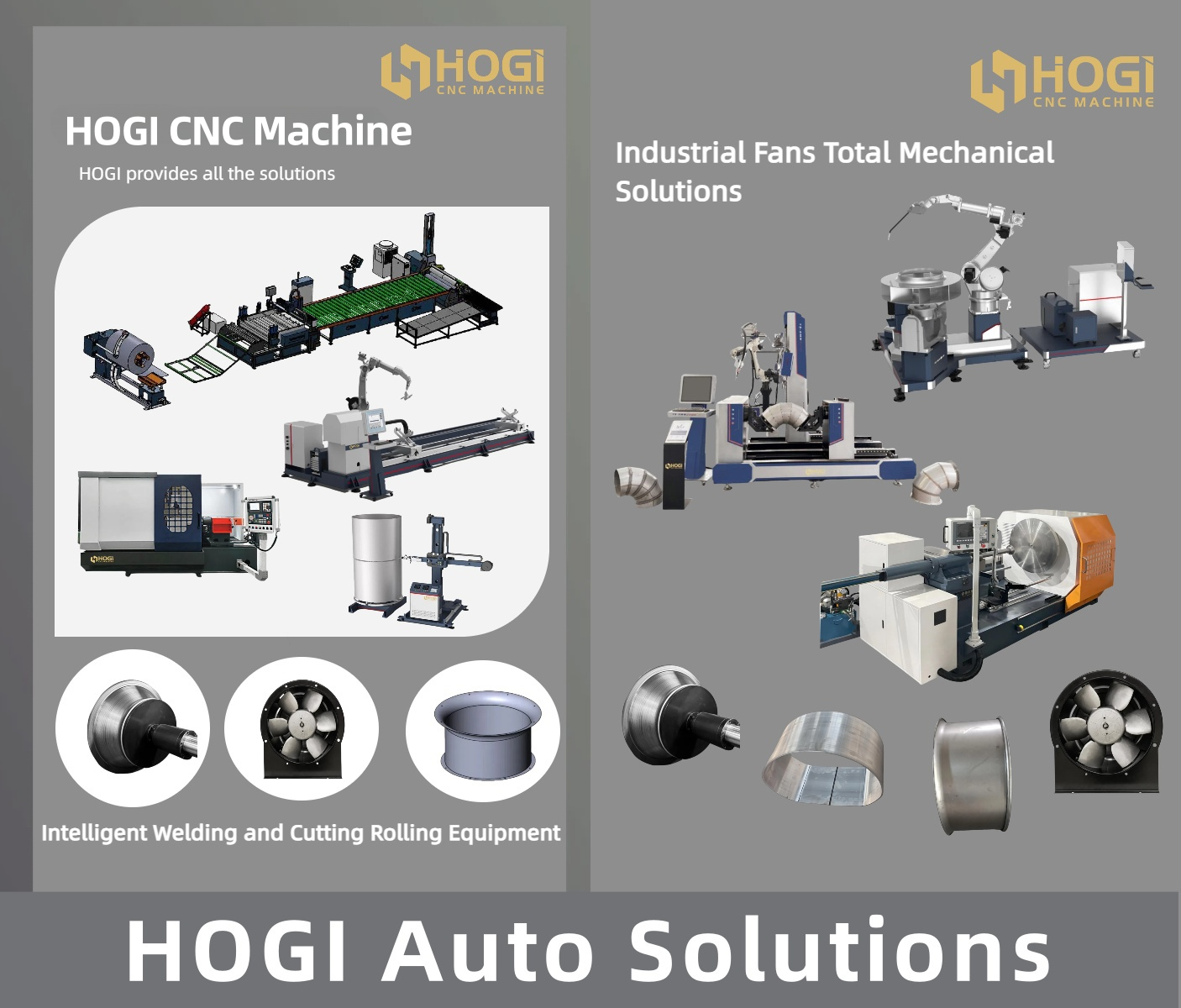
2. Processing Technology: From “Semi-Automation” to “Fully Digitalized Process”. Leading companies in the industry have introduced the German TRUMPF laser cutting system (processing accuracy ±0.2mm) and an intelligent U-shaped 6-line production system (daily capacity exceeding 5000㎡), achieving full-process digital control of “raw materials-cutting-forming-assembly”. A competitor’s “intelligent flexible production line” uses a “visual inspection system” to correct processing errors in real time, improving duct splicing accuracy to ±0.1mm and reducing air leakage rate to ≤0.5% (far lower than the ≤2% required by GB 50243-2016 “Code for Acceptance of Construction Quality of Ventilation and Air Conditioning Engineering”).
- Full-process collaboration: From “design-processing-installation” separation to “BIM + supply chain collaboration”. Through BIM detailed design (building a 3D model of the duct system) + CFD airflow simulation (predicting airflow distribution), pre-processing collaboration is achieved, reducing rework rate to ≤2%. Simultaneously, relying on a “high-speed supply chain” (pre-stocking of raw materials + remote collaborative production), emergency delivery time is reduced to within 48 hours.
Chapter 3 Technology Implementation Cases: Validation from Emergency Scenarios to High-End Buildings
1. Emergency Scenario: The project required the delivery of 3000㎡ of 304 stainless steel ductwork, static pressure boxes, and silencers within 48 hours. Through “BIM rapid modeling + intelligent production line priority scheduling,” detailed drawings were completed in 1 hour, production started in 2 hours, and all deliveries were completed within 40 hours, ensuring the hospital ventilation system was put into operation on schedule, with an air leakage rate ≤0.3%, meeting the “negative pressure isolation” requirement.
2. Super High-Rise Building: As a 452-meter super high-rise building, the ventilation system required “high air pressure, low air leakage, and quiet operation.” 304 stainless steel rectangular tubes (1.2mm wall thickness) were used. The duct routing was optimized through CFD airflow simulation, with processing accuracy controlled within ±0.1mm. The system operating noise was ≤35dB (compliant with GB 50118-2010 “Code for Sound Insulation Design of Civil Buildings”), and energy consumption was reduced by 12% compared to traditional systems. 3. Industrial Cleanroom: The entire factory workshop requires “ISO Class 6 cleanliness.” 316L stainless steel ducts (surface roughness Ra≤0.8μm) are used. Laser welding and seamless splicing technology eliminates dead corners within the ducts, preventing bacterial growth. The system has operated for 3 years without exceeding particulate matter standards, and maintenance costs have been reduced by 40%.
4. Peer Case: A “composite stainless steel duct + intelligent regulating valve” system, using BIM collaborative design, addresses the ventilation needs of “large spaces, multiple zones.” Duct installation efficiency is improved by 25%, and operating energy consumption is reduced by 12%, meeting the ventilation requirements of an airport with “100,000 passengers/hour during peak hours.”
5. Peer Case: For hospitals facing “disinfectant corrosion,” 316L stainless steel ducts are used. The system has a salt spray corrosion resistance time >1500 hours. After 3 years of operation, no rust has appeared, and the air leakage rate remains ≤0.4%, meeting the “airtightness” requirements of the “Technical Specification for Clean Operating Room Buildings in Hospitals.”
Conclusion In 2025, the production of finished stainless steel ductwork has entered a collaborative stage encompassing the entire lifecycle of materials, design, processing, and operation and maintenance. The core of technological innovation is “precise matching of high-end scenario needs.” Leading ventilation system solution providers, relying on “full-process digital production + major project support capabilities,” have achieved technological implementation in medical, high-rise, and industrial scenarios—their “48-hour emergency supply capability,” “±0.1mm processing accuracy,” and “corrosion resistance of 316L stainless steel ductwork” have become industry benchmarks.
In the future, the industry needs to further promote upgrades in “intelligentization + sustainability”: firstly, by introducing “digital twin” technology to achieve real-time monitoring and predictive maintenance of ductwork systems; secondly, by developing “recyclable stainless steel materials” to reduce carbon emissions throughout the entire lifecycle. Continuing to focus on “finished stainless steel ductwork production for high-end scenarios” will provide more precise ventilation solutions for high-rise buildings, healthcare, and high-end manufacturing.
The industry is projected to expand at a CAGR of 6.8% from 2025 to 2030. The core logic driving growth lies in the explosive growth of high-end demand: the demand for ventilation systems in super high-rise buildings (over 300 meters) is increasing by 12% annually, the demand for transportation hubs (with tens of millions of passengers) is increasing by 8% annually, the demand for medical cleanrooms is increasing by 10% annually, and the demand for high-end industrial manufacturing (such as new energy and semiconductors) is increasing by 15% annually. Against this backdrop, stainless steel ducts, due to their corrosion resistance, long lifespan, and high cleanliness, have become the “standard configuration” for high-end scenarios, with their share increasing from 15% in 2019 to 22% in 2025. However, the contradiction between the industry’s traditional model and high-end demand is becoming increasingly prominent.
I. Industry Pain Points: The Triple Contradiction Between Traditional Models and High-End Demands
1. Bottleneck of Production Precision. According to the “Specifications for the Fabrication and Installation of Ventilation Ducts,” the dimensional deviation of ventilation ducts must be controlled within ±0.5mm to ensure on-site installation compatibility. However, under traditional manual or semi-automated production models, most manufacturers can only achieve a processing precision of ±1mm or more, leading to repeated cutting and adjustments during on-site installation, delaying the construction period. Data from a high-rise building project shows that insufficient duct precision reduced installation efficiency by 30% and increased costs by an additional 15%.
The stainless steel duct manufacturing industry is shifting from “quantity expansion” to “quality improvement,” with intelligent manufacturing, full-industry chain services, and emergency support becoming core competitive advantages. Hunan Weitong Metal, as an industry benchmark, provides a model that can be learned from through digital production, full-process services, and an emergency response system. In the future, industry participants need to strengthen technological research and development to improve production precision; improve emergency response systems to cope with sudden demands; expand full-industry chain services to improve system compatibility; and strictly adhere to material standards to ensure reliability. Only in this way can high-end demands be met and the industry be driven towards higher-quality development.
In the future, the ventilation duct industry will develop towards high-end materials, intelligent production, and integrated services. Industry participants need to strengthen technological research and development to improve product quality and service capabilities.
316L stainless steel ducts, with their superior material properties, mature technical solutions, and efficient supply capabilities, have become the preferred ventilation product for fire smoke extraction and transportation hub scenarios. Mainstream suppliers have effectively addressed industry pain points and improved project quality and efficiency through process optimization, capacity layout, and service upgrades. Full life-cycle service will become a core competitive element in the future ventilation system industry, requiring suppliers to further strengthen their technical service capabilities to meet diverse customer needs.
Looking ahead, with the continued advancement of infrastructure projects and the continuous improvement of fire protection standards in Central China, the market demand for 316L stainless steel ducts will maintain stable growth. We will continue to deepen our technological research and development and service upgrades for 316L stainless steel ducts, leveraging our production capacity advantages and project experience to provide higher-quality products and services for fire smoke extraction and transportation hub ventilation system projects. At the same time, industry participants should strengthen technical exchanges and cooperation to jointly promote the high-quality development of the ventilation system industry.