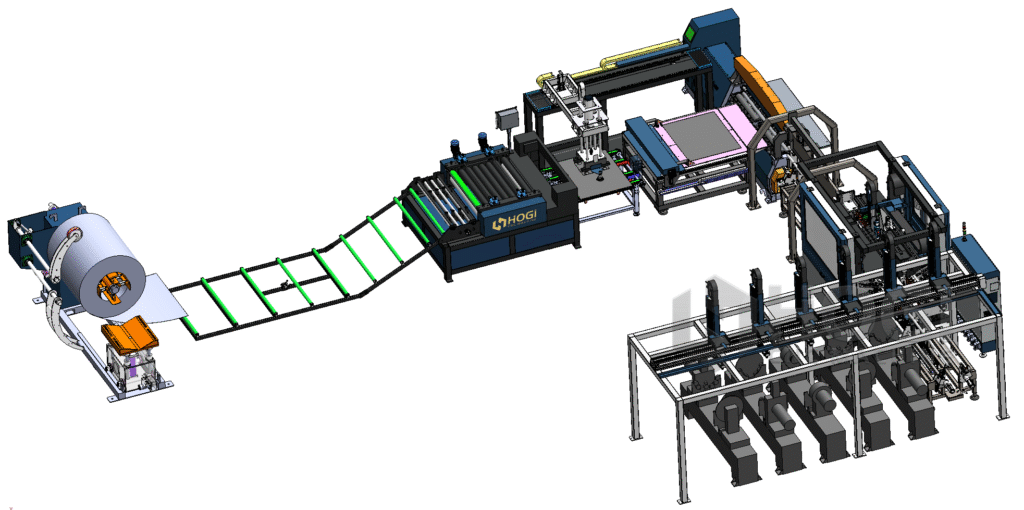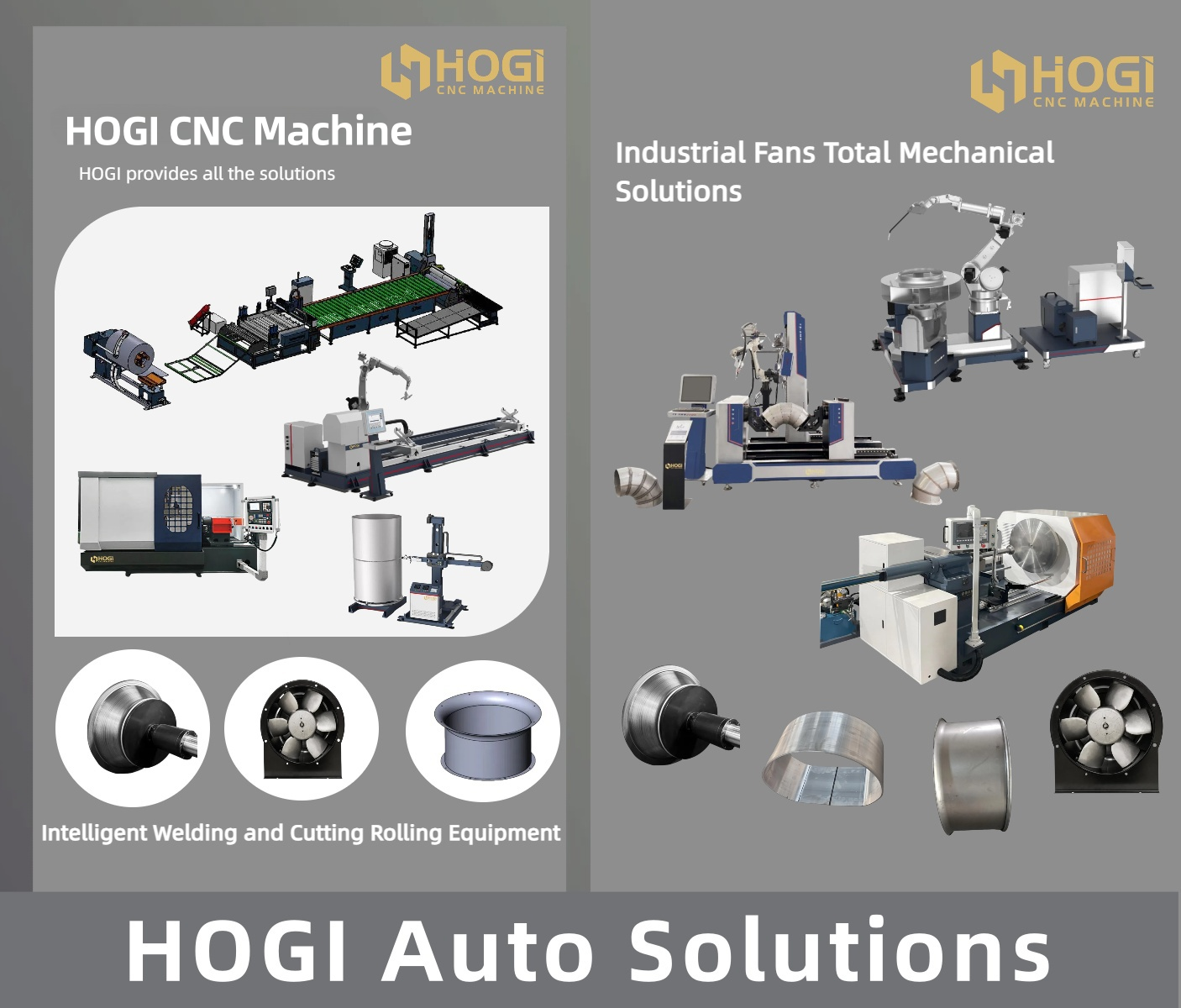
Discover how HOGI CNC Full-Servo 4-Roll Plate Rolling Machines deliver ±0.1mm forming accuracy, 40% higher throughput, and regenerative energy savings for modern sheet metal fabrication.
In the sheet metal fabrication industry, the plate rolling machine serves as core production equipment whose performance directly governs forming precision and operational efficiency. From massive ship hull bulkheads to precision curves on home appliance housings, and from curved architectural curtain walls to complex automotive sheet metal profiles, the 4-roll plate bending machine has become an indispensable “forming specialist” in modern manufacturing thanks to its superior accuracy and stability. #servorollingmachine
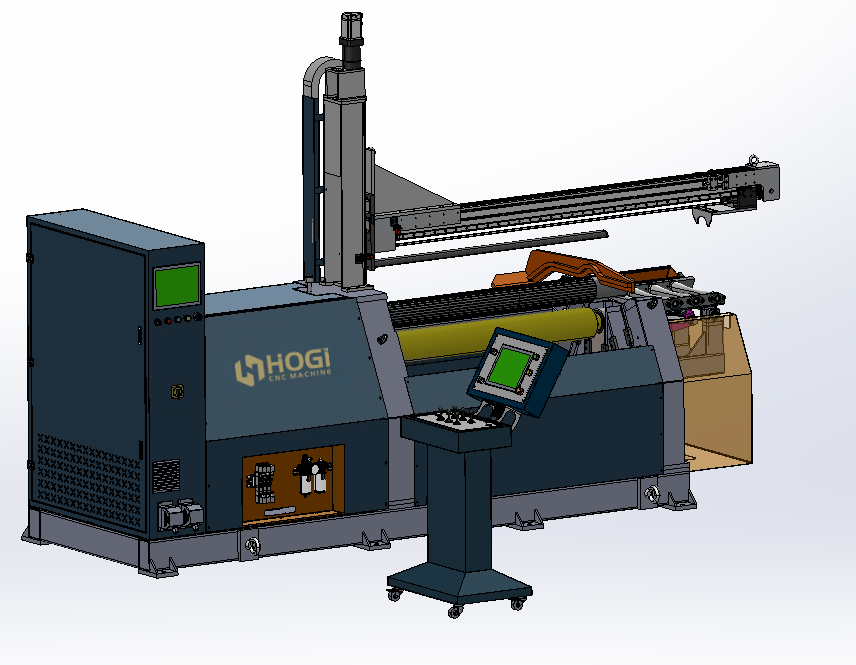
Advantages of HOGI Full-Servo 4-Roll vs. Hydraulic 4-Roll Plate Bending Machines
Technological Innovation: Core Strengths of HOGI 4-Roll Plate Rolling Machine
Compared with traditional 3-roll plate bending machines, a 4-roll plate rolling machine adds an extra side roll to achieve bidirectional pre-bending and high-precision forming in a single pass. Its technological advantages span three primary dimensions:
- Precision Control: Through seamless coordination between the CNC control system and high-response servo motors, plate forming tolerances are controlled within ±0.1 mm—meeting stringent requirements in aerospace, pressure vessels, and precision engineering.
- Efficiency Boost: All-servo CNC 4-roll plate bending machines support automated continuous operation, reaching a daily processing capacity of up to 20 tons per unit—a 40% productivity increase over conventional machines.
- Broad Material Versatility: Hydraulic 4-roll plate bending machines utilize precision hydraulic pressure regulation to handle carbon steel, stainless steel, aluminum alloys, and specialty metals across thicknesses ranging from 0.5 mm to 200 mm, satisfying diverse heavy-duty production needs.
The leap in manufacturing accuracy and energy efficiency goes far beyond simple hardware upgrades. Powered by independent servo drives and real-time compensation algorithms, the all-servo 4-roll plate bending machine pushes roll positioning to sub-millimeter precision, significantly improving material utilization while feeding regenerative braking energy back into the power grid. Its value extends beyond high-accuracy forming—it provides a flexible manufacturing solution for high-mix, low-volume production and complex variable-curvature workpieces, empowering manufacturers to reduce operating costs, boost output, and innovate processes.
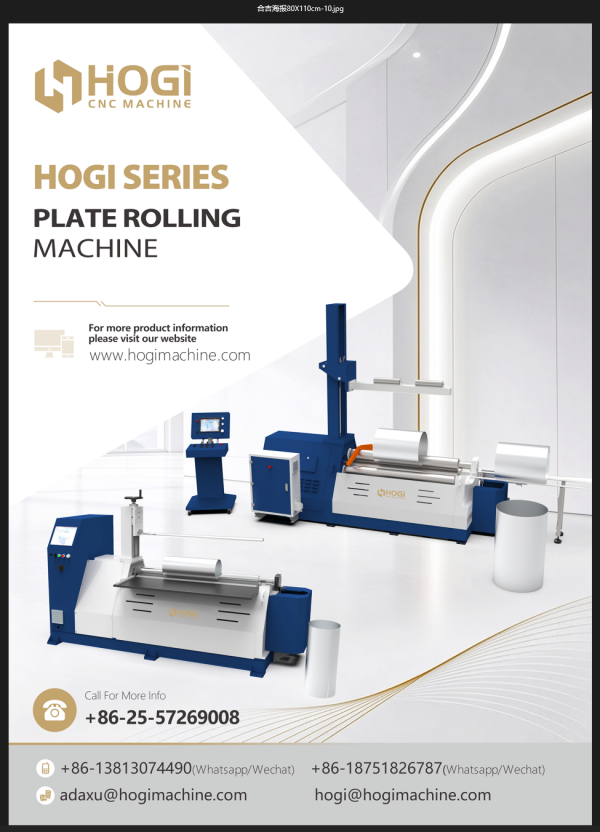
| Key Metric | HOGI Full-Servo 4-Roll Bender | HOGI Hydraulic 4-Roll Bender |
| Drive Mechanism | Independent servo motors + precision ball screws / gear reducers | Hydraulic cylinders + proportional valve groups |
| Forming Accuracy | Sub-millimeter positioning; tolerances within ±0.1 mm | High force output; moderate positioning accuracy |
| Energy Efficiency | High efficiency with regenerative braking energy feedback | Continuous hydraulic pump power consumption |
| Maintenance & Cleanliness | Oil-free, low maintenance, zero hydraulic leak risk | Requires regular hydraulic oil, seal, and valve maintenance |
| Best-Fit Applications | High-mix, small-batch, thin-to-medium plates, complex cones & multi-radius arcs | Ultra-thick plates, heavy-duty high-tonnage cold rolling |
How HOGI Full-Servo 4-Roll Plate Bending Machines Work
The HOGI Full-Servo 4-Roll Plate Bending Machine is a flagship solution in precision sheet metal forming. “Full-Servo” means every motion axis is independently driven by a dedicated servo motor and synchronized at high precision via an advanced CNC system. Compared with mechanical or hydraulic drives, all-servo 4-roll plate rolling machines offer substantial advantages in positioning accuracy, dynamic response speed, and energy management. The “4-Roll” architecture comprises a top roll, a bottom clamping roll, and two opposing side rolls—four working rolls in total—that adjust dynamically to pre-bend and roll metal plates into exact cylindrical, conical, or custom profiles.
From an engineering standpoint, manufacturing an all-servo 4-roll plate bending machine integrates mechatronics, proprietary CNC software development, and structural finite-element mechanics. A mature manufacturer maintains a dedicated R&D team capable of delivering custom-engineered solutions tailored to specific industry standards. Core industrial applications include pressure vessels, pipeline fabrication, structural steel construction, wind turbine towers, and shipbuilding—sectors that demand strict tolerances in circularity, conicity, straightness, and surface finish.
One of the defining strengths of an all-servo 4-roll plate rolling machine lies in its ultra-precise displacement control. By pairing high-torque servo motors with precision ball screws or zero-backlash gear reducers, each roll axis can be positioned to millimeter or even micron-level increments. During rolling, the CNC controller calculates real-time feed values for every roll based on plate thickness, width, material yield strength, and target curvature—minimizing trial runs and maximizing raw material yield. Furthermore, all-servo drives feature regenerative energy recovery, converting mechanical kinetic energy back into electrical power during deceleration and braking for dramatically lower power consumption than hydraulic alternatives.
Equipment Selection Guide: What to Look for in a 4-Roll Machine Manufacturer
When evaluating an all-servo 4-roll plate bending machine for your facility, buyers should assess four critical engineering pillars:
- Structural Frame Rigidity: Determines resistance to deflection under heavy rolling loads, directly governing dimensional stability when forming thicker plates.
- Roll Shaft & Alignment Precision: Includes roll parallelism and radial runout tolerances, which transfer directly to the final outer diameter (OD) accuracy of the rolled cylinder.
- CNC Software & Compensation Algorithms: An advanced CNC platform should support multi-point rolling, automatic springback compensation, and conical rolling, paired with an intuitive operator HMI.
- After-Sales Service & Lifecycle Support: Comprehensive on-site installation and commissioning, operator training, remote cloud diagnostics, and rapid spare parts availability ensure uninterrupted long-term production.
For leading 4-roll plate bending machine manufacturers, product innovation centers on smart connectivity and modular architecture. Modern systems integrate Industrial IoT (IIoT) modules into the CNC controller for real-time operational data acquisition, remote diagnostics, and predictive maintenance. Simultaneously, modular engineering enables fabricators to add or swap functional attachments—such as interchangeable top rolls of varying diameters, automated plate feeding and support tables, and post-rolling calibration/re-rounding units—maximizing machine versatility and return on investment.
Application Fit, Operational Safety & Preventive Maintenance
From a practical production perspective, an all-servo 4-roll plate bending machine is not a one-size-fits-all replacement for every rolling job. For high-volume, single-specification simple arc rolling, conventional 3-roll or hydraulic 4-roll plate benders may offer a lower upfront cost advantage. Conversely, all-servo 4-roll machines excel in high-mix, low-volume, tight-tolerance, and complex-geometry tasks—such as cones, obround vessels, and variable-radius multi-curvature parts. Evaluating your specific product mix and process requirements ensures the right balance between capital expenditure and precision capability.
Because all-servo 4-roll plate bending machines operate with multiple high-speed synchronized axes, comprehensive safety systems—including optical safety light curtains, electronic overload protection, and dual-channel emergency stop circuits—are essential. At delivery, manufacturers provide detailed Standard Operating Procedures (SOPs) and require certified operator training. Routine preventive maintenance involves periodic inspection of servo motor cooling systems, ball screw lubrication levels, and electrical terminal tightness to keep the machine operating at peak reliability.
Ultimately, the engineering expertise of your 4-roll plate bending machine supplier directly determines rolling accuracy, operational uptime, and equipment service life. Evaluating proven field case studies, R&D depth, and responsive technical support outweighs comparing purchase price alone. As global manufacturing accelerates toward precision and flexible automation, all-servo 4-roll plate rolling technology continues to set new benchmarks in metal forming.
Frequently Asked Questions (FAQ)
1. What is the main difference between an Full-servo 4-roll plate bending machine and a hydraulic 4-roll plate bending machine?
HOGI Full-servo 4-roll plate bending machine uses independent servo motors to drive each roll axis, delivering superior positioning accuracy, faster dynamic response, and lower energy consumption. A hydraulic 4-roll machine relies on hydraulic cylinders and proportional valves—offering high pressing force for ultra-thick plates, but with lower positioning precision, slower response, and higher ongoing hydraulic maintenance costs.
2. What types of metal plates can an all-servo 4-roll plate rolling machine process?
It is ideal for rolling carbon steel, stainless steel, aluminum alloys, and other ductile sheet metals, excelling especially in thin-to-medium plate precision forming. It easily produces cylinders, cones, and variable-radius arcs, though extreme ultra-thick plates or ultra-high-strength alloys typically require heavy-duty hydraulic cold-rolling equipment.
3. How do you verify the forming accuracy of an Full-servo 4-roll plate bending machine?
Accuracy is verified by measuring test-rolled workpieces for circularity (roundness), outer diameter (OD) tolerance, straightness, and longitudinal seam mismatch, alongside reviewing the manufacturer’s factory inspection report for individual axis positioning and repeatability accuracy.
4. Do the servo motors on an full-servo 4-roll plate bending machine require special maintenance?
Routine maintenance includes periodically inspecting motor bearings, encoder cables, and cooling fans, keeping motor housings clean, and lubricating the gear reducers or ball screws according to the manufacturer’s operating-hour schedule.
5. What qualifications should buyers verify when sourcing an full-servo 4-roll plate bending machine?
Verify that the manufacturer holds relevant electromechanical manufacturing certifications, ISO quality management system certifications, and proven delivery case studies for comparable machines. Always request detailed technical specifications and comprehensive warranty/service-level terms to evaluate overall capability.
| Upgrade Your Sheet Metal Rolling Line with HOGI CNC MACHINE Looking for a custom CNC Full-Servo or Hydraulic 4-Roll Plate Bending Machine tailored to your plate thickness, material grade, and production volume? Contact HOGI CNC MACHINE’s engineering team today for a free technical consultation, rolling feasibility test, and turnkey factory quote.(+86-13813074490(WHATSAPP/WECHAT) |