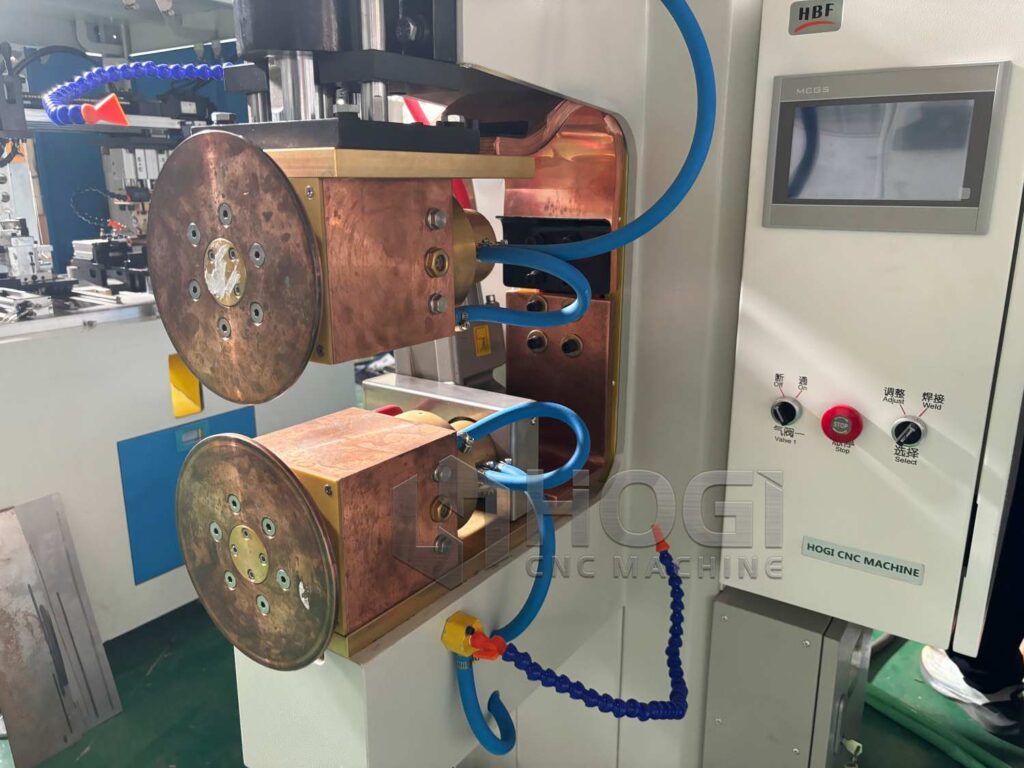
Medium-Frequency Aluminum Sheet Roll Welding Machine Medium-Frequency Nickel Mesh Roll Welding Machine
Product Overview
Roll welding replaces the cylindrical electrodes used in spot welding with a pair of roller electrodes. The workpieces being welded move between the rollers, producing a series of overlapping molten nuclei to form a sealed weld that joins the parts. The weld consists of individual weld points. Depending on the degree of core overlap during melting, it is classified as either roll spot welding or gas-tight seam welding.
Application Range
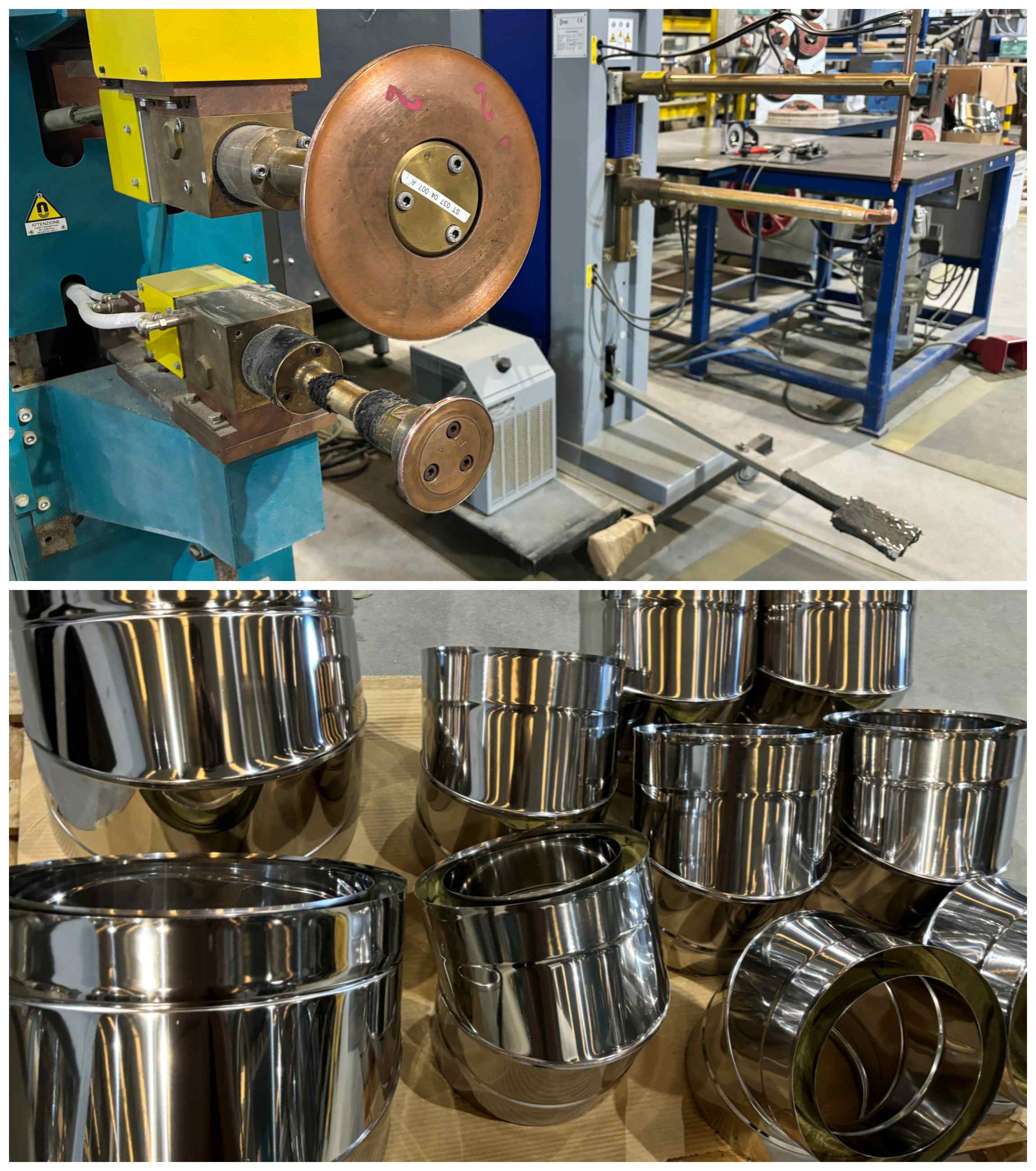
This equipment offers high versatility: suitable for sealing welds on various metal containers, frying baskets, water boilers, sinks, fuel tanks, filters, and metal can/drum air duct manufacturing.
Advantages of Medium-Frequency Spot Welding Machines
1. High Welding Quality: Precise current control minimizes welding defects; small heat-affected zone reduces deformation and residual stress; excellent weld consistency.
2. Energy Efficiency: High power factor typically exceeding 0.9; high welding efficiency with rapid welding speed.
3. High Adaptability: Capable of welding diverse materials including steel, aluminum, copper, and other metals; flexible welding processes accommodate varying requirements and workpiece geometries.
4. User-Friendly Operation: Intelligent interface allows operators to easily set parameters via touchscreen or buttons, monitor processes in real-time, and learn operations quickly. Low maintenance costs, simple structure, high reliability, minimal failure rates, and extended service life.
5. Superior Safety: Comprehensive safety protections minimize accident risks; no open flames eliminate fire hazards.
6. Eco-Friendly & Pollution-Free: Produces no exhaust gases or fumes during welding, with minimal external heat radiation and low noise levels, meeting environmental standards.
7. Advanced Automation: Real-time, precise automatic control based on workpiece status ensures consistent weld quality; Temperature uniformity is excellent, controllable within 1%, enhancing product quality and yield rates.
8. Time and Energy Saving: The core structure utilizes a thyristor-based inverter induction heating power supply, eliminating preheating requirements and enabling instant start/stop operation.
9. Wide Application Range: Extensively used across automotive manufacturing, home appliance production, electronics, aerospace, rail transportation, mechanical processing, and numerous other industries.
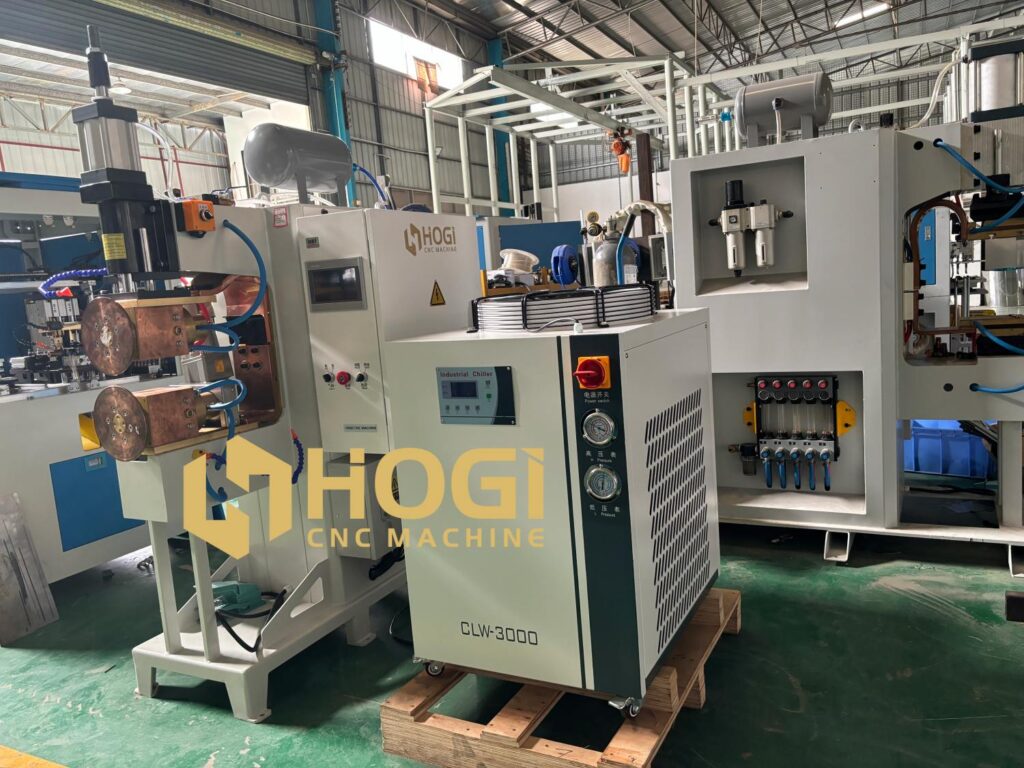
Fully Automated Medium-Frequency Roll Welding Machine
This medium-frequency inverter roll welding machine utilizes medium-frequency inverter technology as its power source, ensuring greater stability during welding. Workpiece transportation is automated, and current monitoring eliminates the need for post-weld inspection. Servo motors drive the rollers for enhanced welding precision.
Working Principle of Medium-Frequency Roll Welding Machines
I. Working Principle of Medium-Frequency Roll Welding Machines
A medium-frequency roll welding machine is a type of metal welding equipment. Its working principle utilizes medium-frequency induction heating to generate an induced current on the surface of metal components. Under the influence of this current, the metal is heated to a specific temperature, thereby achieving fusion welding. Specifically, the machine rotates a conductive rod (referred to as a “roller”) via an electric motor while applying pressure to the surface of the metal parts to be welded. When the conductive rod contacts the metal surface, electrical energy is converted into thermal energy. This rapid heating brings the metal surface to a specific temperature, enabling fusion welding.
II. Advantages of Medium-Frequency Roll Welding Machines
Medium-frequency roll welding machines offer the following benefits:
1. High Efficiency: Medium-frequency induction heating boasts high energy conversion efficiency and rapid heating speed, enabling metal to reach the required temperature for fusion within a short timeframe.
2. High Quality: The weld seams produced by medium-frequency roll welding machines exhibit superior quality, ensuring consistency and strength.
3. Energy Efficiency and Environmental Friendliness: These machines convert electrical energy into thermal energy, conserving resources and producing no pollutants, making them environmentally friendly equipment.
4. Wide Application: Medium-frequency roll welding machines can weld various metal materials, such as steel pipes, stainless steel, and aluminum alloys, and are widely used in automotive, aerospace, chemical, and power industries.
III. Key Considerations for Using Medium-Frequency Roll Welding Machines
1. Select Appropriate Power Supply: Medium-frequency roll welding machines consume significant electrical energy, necessitating a power supply that meets specified requirements.
2. Optimize Parameter Settings: Adjust current levels and pressure settings appropriately to achieve optimal welding results.
3. Maintain Equipment: Regular maintenance and servicing are essential to ensure the medium-frequency roll welding machine operates reliably throughout its service life.
HOGI Seam Roll welding machines perform a form of metal welding that combines materials. During welding, the workpiece is clamped between two rollers. As the rollers rotate, they drive the workpiece while applying electrical current. The welding current causes localized heating in the workpiece, forming successive overlapping weld spots that create a continuous weld seam, thereby achieving the connection. Widely used for seam welding in applications such as:
– Enclosures (e.g., automotive and motorcycle fuel tanks)
– Barrels (e.g., oil drums)
– Formed sheet metal components (e.g., wheel rims, mufflers, radiators)
Roll welding machines typically consist of:
– Frame
– Pressure mechanism
– Welding rollers (electrodes)
– Trimming knife
– Welding power source
– Speed-adjustable rotation mechanism
– Controller
Pressure Mechanism: Transfers pressure, uniformly adjusts pressure between welding wheels, and compensates for electrode wear.
Welding Wheels and Trimming Knife: Welding wheels feature internal and external water cooling. Conductive blocks use silver brush structures for excellent conductivity with automatic compensation for brush wear. The trimming knife shapes the outer circumference of welding wheels to maintain optimal working surface geometry.
Roll Welding Machine Power Source: Available in AC and secondary rectified DC types. Selection depends on workpiece material and welding process requirements.
Speed Control Rotation Mechanism and Controller: Utilizes variable frequency speed control with gear reducer rotation; the controller serves as a critical unit throughout the welding process. Seam welding machines are categorized into AC and secondary rectified DC types. The former is suitable for welding uncoated low-carbon steel and alloy steel workpieces; the latter is suitable for welding stainless steel, aluminum, aluminum alloys, titanium, titanium alloys, coated steel plates, and other materials. Basic welder configurations include horizontal welding (H) and vertical welding (Z).
AC Roll Welding Machine #seamweldingmachine
DC Seam Welding Machine #MFWELDING #ROLLWELDINGMACHINE