Home Indoor Heater Multi-Purpose Winter Camping Tent Stove Outdoor
New Portable Stove Outdoor Charcoal Fire Pit Heater Multi-Functional Wood-Burning Stove
The stove manufacturing industry encompasses various product types, such as fireplaces, wood-burning stoves, and dual-fuel wood/coal stoves, primarily serving applications like home heating, outdoor camping, and disaster relief. 1. Industry participants include specialized manufacturers and diversified hardware enterprises, with production processes typically involving stainless steel fabrication, laser cutting, CNC bending, and other techniques.
Product types and technical features vary widely, including: • Household and disaster relief stoves: Emphasizing safety and durability, such as upright fireplaces with chimneys and smokeless indoor heaters; • Outdoor camping stoves: Focusing on portability and versatility, like foldable wood-burning stoves and tent stoves made of stainless steel for easy storage; Customization and innovative designs: Some companies offer personalized customization, integrating traditional heating methods with new technologies to enhance practicality. Market trends indicate that growing demand for outdoor activities is driving sales of portable stoves. Cross-border e-commerce has become a key sales channel, with product designs trending toward lightweight and eco-friendly features—such as heating stoves using bio-pellet fuel.
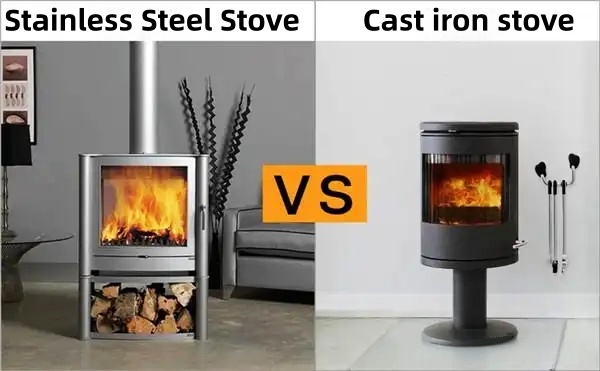
Cast Iron Stove vs. Steel Stove: How to Choose?
Before comparing cast iron stoves and steel plate stoves, you must first understand that both cast iron and steel are made from the same material—iron. Cast iron is produced by melting iron and pouring it into molds, while steel plate is formed by rolling molten iron into sheets.
The production processes for cast iron and steel plate differ, and the types and quantities of trace elements added during manufacturing vary. This results in distinct differences in their physical properties. Cast iron outperforms steel plate in high-temperature resistance, corrosion resistance, and heat retention. However, the casting process is complex: each casting requires a mold, and procedures like sand molding, iron melting, pouring, and shot blasting create harsh working conditions in foundries, high energy consumption, and elevated production costs.
Steel plate processing is significantly simpler, primarily utilizing common sheet metal fabrication techniques such as laser cutting, bending, punching, and welding. These processes can be completed in standard factory facilities, resulting in manufacturing costs substantially lower than casting.
Casting enables the creation of intricate relief patterns and curved surfaces. The distinctive rugged texture of cast iron evokes a sense of vintage elegance and nobility, embodying a timeless composure and serenity that transcends the passage of time.
Steel plates are easy to process, allowing for the convenient creation of various irregularly shaped parts. Steel plate stoves on the market feature either bold, angular lines emphasizing cost-effectiveness, or avant-garde designs pursuing a sense of style and fashion.
The casting process inherently makes cast iron components thicker and heavier than steel plate ones. Consequently, cast iron stoves are heavier than steel plate stoves of the same size and possess superior heat retention capabilities. This offers two advantages: first, cast iron stoves maintain heat longer after the fire dies down; second, they reduce the frequency of relighting. Often, glowing embers remain in the firebox the next morning, requiring only a few sticks of kindling to reignite the flame. Steel plate stoves cool more rapidly, and if fuel isn’t added promptly after the fire goes out, relighting may be necessary. Both cast iron and steel plates corrode, but at different rates and levels. During casting, trace elements like silicon, manganese, phosphorus, and nickel are added. Over time, the surface oxidizes to form a protective layer, significantly slowing cast iron’s corrosion rate in air. Steel plates exhibit poorer corrosion resistance, relying primarily on applied paint coatings for surface protection. Due to the exceptionally smooth surface of steel plates, paint adhesion is inherently weak on such surfaces. If the spraying process is not executed properly, the steel plate is highly susceptible to rusting.
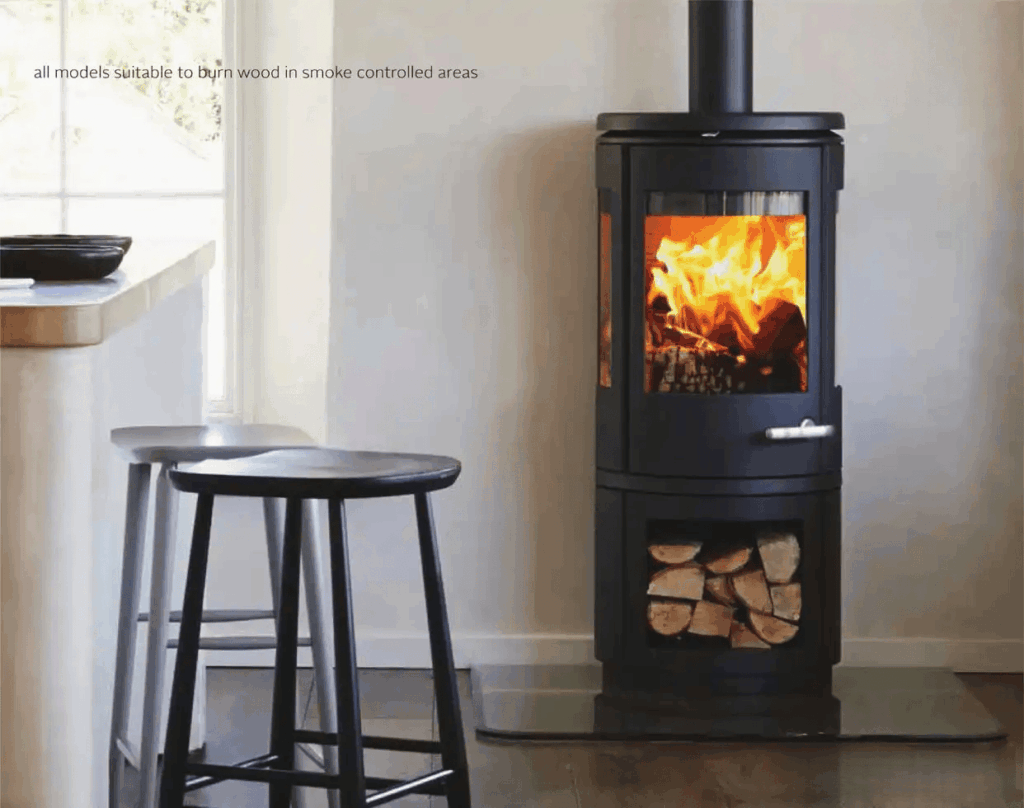
Cast iron stoves are assembled by connecting numerous cast iron components using a “bolt + sealing cord + nut” method. This flexible connection between parts allows for greater adaptation to repeated thermal expansion and contraction. The sealing cord, woven from ceramic fibers, offers elasticity, high-temperature resistance, and corrosion resistance—functioning like tendons connecting skeletal structures. Such stoves are essentially “breathing” machines. During rapid temperature shifts, you can hear the creaking sounds as components press against each other. The sealing cord provides cushioning and allowance for thermal expansion, preventing internal damage caused by repeated metal contraction and expansion. Furthermore, this bolted connection allows any damaged part to be easily replaced, much like LEGO blocks. Theoretically, the lifespan of a cast iron stove depends solely on the availability of replacement parts. As long as components are accessible, you can repair it—swap out a part, give it a fresh coat of paint, and you have a new stove.
Steel plate stoves are assembled through welding. Welds are prone to cracking under prolonged exposure to extreme temperature fluctuations (800°C to 10°C) and are susceptible to rust when exposed to water vapor or condensation (fresh wood contains significant moisture). Damage to the combustion chamber signifies the end of the stove’s service life, making steel plate stoves generally less durable than cast iron ones.
Steel plate stoves are assembled by welding their components together. The welds are prone to cracking under the prolonged exposure to extreme temperature fluctuations (800°C to 10°C) and are susceptible to rust when exposed to water vapor or condensation (fresh wood contains significant moisture). Damage to the combustion chamber signifies the end of the stove’s service life. Consequently, steel plate stoves generally have a shorter lifespan than cast iron stoves.
Below we will illustrate the differences between cast iron stoves and steel plate stoves by comparing two European models. We selected models M8843 and A9 for comparison. These two models were chosen because Mors and Aduro are both renowned Danish stove manufacturers operating within the same social and geographical context. They must meet identical production specifications and testing standards. Furthermore, these models are remarkably similar in key metrics such as external dimensions, design, power output, and combustion efficiency, making their comparison highly illustrative.
As shown in the parameter comparison table above, the A9 and M8843 have nearly identical external dimensions. However, the steel-plate A9 weighs only 93kg, while the cast-iron M8843 tips the scales at 192kg—more than double the weight of its counterpart. However, the A9’s lightweight strategy is not without its advantages. Its lighter weight translates to lower manufacturing costs, easier handling, reduced logistics expenses, and, of course, a more affordable price point.
The A9’s combustion chamber capacity is approximately 30% larger than the M8843’s, allowing it to hold more fuel. However, the latter achieves a maximum power output 33% higher than the former, reaching 9.6 kW. This indicates the M8843 can operate at higher temperatures for extended periods. This maximum power difference also determines their heating area capabilities. The M8843’s maximum heating area is 120m², 30m² larger than the A9.
Both stoves achieve combustion efficiency exceeding 80%, surpassing the 75% threshold required by the EU EcoDesign 2022 standard. Both have earned Nordic Swan Ecolabel certification, demonstrating that material differences do not impact combustion efficiency.
The complete cooling-down time refers to the duration required for the furnace temperature to drop from 600°C to 40°C after ceasing fuel feeding, also known as the fuel-free heat retention time. In this parameter, the M8843 significantly outperforms the A9, achieving an impressive 10 hours—3.3 times longer than the A9. The diagram below illustrates room temperature changes after ceasing fuel addition. The blue curve represents the A9, while the red curve represents the M8843. The graph shows that the temperature decline curve in the room with the A9 stove is extremely steep. After fuel addition stops, the room temperature drops rapidly. Three hours later, the stove cools completely, and the room temperature falls to 5°C. In the room with the M8843 stove, the temperature decline is gradual. After 10 hours, the room temperature remains around 10°C with minimal fluctuation.
Finally, let’s examine pricing. In this regard, steel plate furnaces hold an overwhelming advantage—the A9 model costs nearly half that of the M8843, making it highly attractive. Steel plate furnaces feature lower manufacturing costs and require no special production facilities. In contrast, large foundries demand significantly greater investment with higher expenses across the board. It can be said that one primary purpose of introducing steel plate furnaces is to reduce furnace manufacturing costs, thereby capturing market share through more competitive pricing.
It should be noted that both cast iron and steel plate are common materials for stove manufacturing, and the material itself is not the sole criterion for distinguishing stove quality. In Europe, both major steel plate stove manufacturers and century-old foundries producing cast iron stoves coexist. The choice ultimately depends on personal aesthetic preferences, usage frequency, and budget constraints. If your budget allows and you intend to use the stove as your primary winter heating source, prioritizing overnight burning and sustained heat retention, opt for a cast iron stove. If your budget is limited, usage is infrequent, and you value rapid heating, then a steel plate stove is the better choice.