Precision Forming from Flat to Three-Dimensional
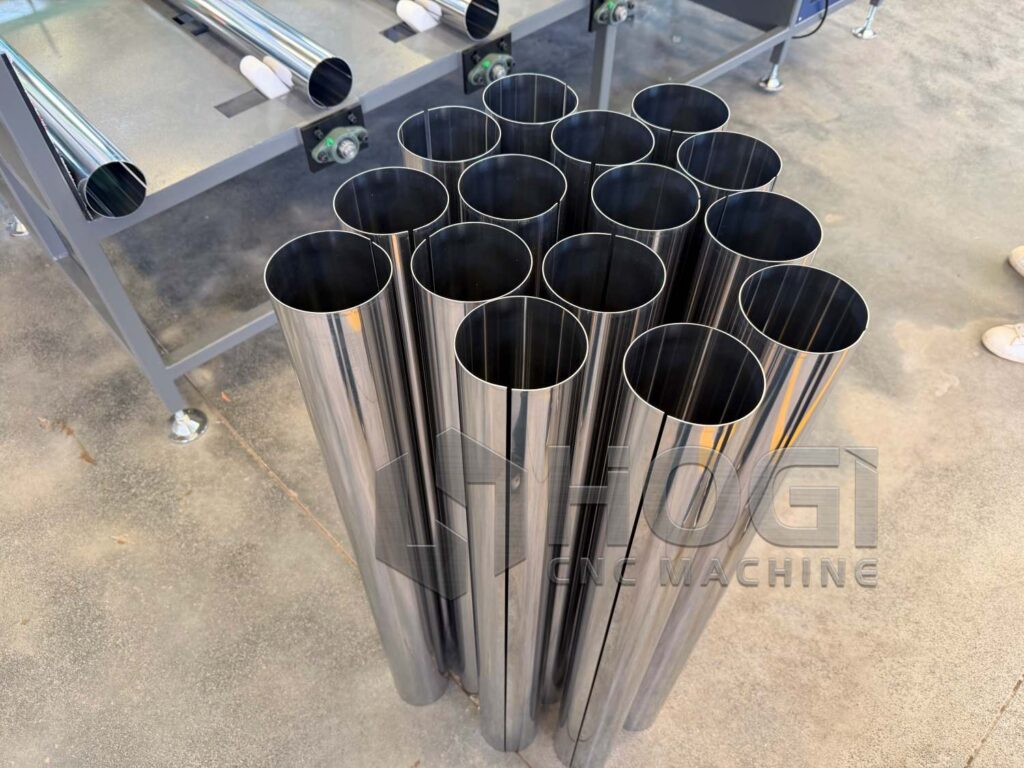
Sheet metal rolling is a highly technically challenging subfield within sheet metal processing. It transforms flat metal sheets into three-dimensional cylindrical or conical structures, finding wide application in aerospace, pressure vessels, architectural decoration, environmental ventilation engineering, and automotive manufacturing. Its core lies in achieving plastic deformation of the metal sheet through precise mold design, process parameter control, and forming technology, while ensuring structural strength, dimensional accuracy, and surface quality.
- Process Principle: Plastic Deformation and Geometric Control of Metals
The essence of rolling is to use external force to induce plastic deformation in metal sheets, forming cylindrical, conical, or elliptical structures. Its core principles involve materials mechanics, geometric calculations, and process control:
- Material properties: The ductility, modulus of elasticity, and yield strength of sheet metal directly affect the forming effect. For example, 304 stainless steel has better ductility than carbon steel, making it more suitable for complex rolling processes; while aluminum alloys, due to their lower modulus of elasticity, require strict control of springback.
- Geometric calculations: During the rolling process, the dimensions of the unfolded material, the bending radius, and the angles need to be calculated precisely. For example, the unfolded material of a right truncated cone is a sector composed of concentric circular arcs, and its arc length, height, and diameter need to be calculated precisely using trigonometric functions; the unfolded material of an oblique truncated cone is an irregular sector, which needs to be achieved through piecewise fitting.
- Stress distribution: Tensile and compressive stresses are generated inside the metal during rolling. The stress distribution needs to be balanced through die design to avoid cracking or wrinkling. For example, when rolling thin sheets, a wrapping method of long side wrapping short side should be used to reduce stress concentration at the edges.
- Equipment and Molds: Upgrading from Traditional to Intelligent
The equipment, molds, and main rollers used in the rolling process are crucial for ensuring forming accuracy, and their development has evolved from manual to automated and intelligent processes:
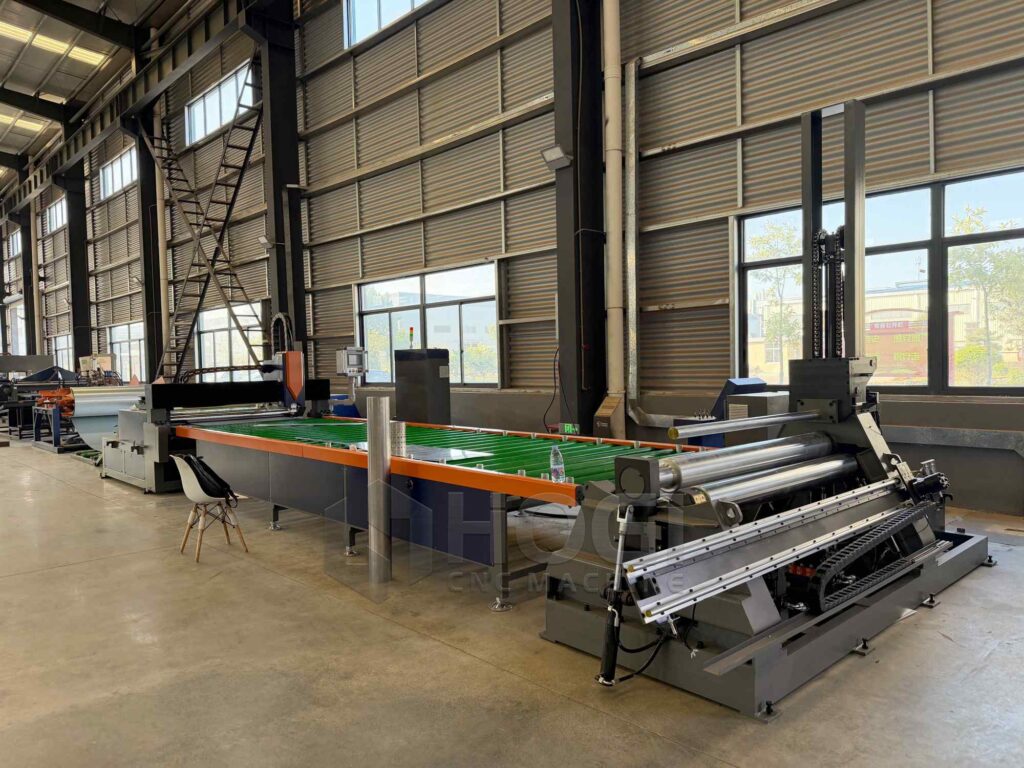
- 3 Roll plate bending machine: A traditional rolling equipment that bends sheet metal by pressing down with the upper roller and rotating with the lower roller. Its limitation is that it can only process regular cylinders, and the inclination of the upper roller needs to be adjusted multiple times to accommodate the rolling of truncated cones. For example, when rolling a truncated cone with a small end diameter of 500mm and a large end diameter of 1000mm, the inclination angle of the upper roller needs to be calculated using a formula and corrected through repeated trials.
- 4 Roll plate rolling machine: Adding side rollers enables more complex rolling processes, such as asymmetrical frustums of cones and multi-segment cylinders. Its advantage lies in its ability to complete complex shape rolling in one pass, reducing errors in process connections. For example, when rolling a spiral ladder side plate, the four-roll plate rolling machine can precisely control the spiral angle by adjusting the side rollers.
- CNC plate rolling machine: Integrates sensors, servo motors, and a CNC system to achieve real-time monitoring and automatic adjustment of the rolling process. For example, the rolling radius is measured by a laser displacement sensor, and the CNC system automatically corrects the pressure of the upper roller to ensure that the cylinder diameter error is ≤0.5mm.
- Specialized molds and rollers: Specialized molds are designed for specific shapes, such as oscillating dies and wedge slider mechanisms. For example, oscillating die molds can roll cylinders with diameters of 8-30mm in one pass, increasing production efficiency by 3 times; wedge slider mechanism molds can achieve horizontal rolling of hinge-shaped parts, avoiding sheet metal instability.
The process of sheet metal rolling involves material preparation, unfolding calculation, blanking, pre-bending, rolling, welding, and shaping, and each step requires strict control:
- Material preparation: Select materials according to product requirements. For example, 304 stainless steel is used for corrosion-resistant applications, while aluminum alloy is used for lightweight applications. The material thickness is usually controlled between 0.5-6mm. If it is too thin, it is prone to wrinkling; if it is too thick, it is difficult to form.
- Unfolding calculation: A unfolded diagram is generated using 3D modeling software, taking into account material elongation, springback, and process allowances. For example, when rolling a frustum of a cone, a 5%-10% elongation allowance needs to be reserved in the unfolded material to compensate for material elongation during the rolling process.
- Material cutting: Laser cutting, CNC punching, or shearing are used to ensure dimensional accuracy ≤ ±0.1mm. Laser cutting is the preferred material cutting method for precision rolling due to its small heat-affected zone and high edge quality.
- Pre-bending: The edges of the sheet material are pre-bent into an arc using a mold to reduce edge stress during rolling. For example, the pre-bending radius must be greater than the minimum bending radius of the material (usually 0.5 times the sheet thickness) to avoid cracking.
- Rolling: Complex shapes, such as truncated cones, are rolled in stages, requiring three steps: pre-bending, segmented rolling, and closing. During the rolling process, the radius, roundness, and misalignment must be monitored in real time, and deviations are corrected by adjusting the pressure of the upper roller or adding guide wheels.
- Welding: After rolling, the longitudinal seam is welded. Common methods include TIG welding (high precision, suitable for thin plates), MIG welding (high efficiency, suitable for thick plates), and spot welding (quick fixation, suitable for assembly). Non-destructive testing is required after welding to ensure weld quality.
- Shaping: Residual stress is eliminated and roundness errors are corrected through flame straightening, mechanical pressure, or hydraulic straightening. For example, when straightening a cylinder with a diameter of 1000mm, the correction amount should be controlled to ≤2mm to avoid excessive deformation.
- Industry Applications: Covering All Aspects from High-End Manufacturing to People’s Livelihoods
Rolled sheet metal processing, with its high precision, high strength, and customization capabilities, has become a core process in many industries:
- Aerospace: Aircraft fuselage skin, engine ducts, and other components require rolling processes to achieve both lightweight and high strength. For example, the fuselage skin of the C919 passenger aircraft is made of aluminum alloy rolled into shape, with a thickness of only 1.2mm, but through optimized rolling processes, its tensile strength reaches 450MPa.
- Pressure vessels:such as storage tanks and heat exchangers, require a cylindrical body manufactured using a rolling process. For example, the cylindrical body of a liquefied natural gas storage tank is made of 316L stainless steel and rolled into shape. Low-temperature solution treatment enhances its corrosion resistance, resulting in a service life of up to 30 years.
- Architectural decoration: Curtain wall keel, spiral staircase, and other structures require rolling technology to achieve complex shapes. For example, the curtain wall keel of the Shanghai Tower is made of Q345B steel rolled into a double-curved shape using a CNC rolling machine, with an error of ≤1mm.
- In automobile manufacturing: tubular parts such as exhaust pipes and drive shafts require a rolling process to create. For example, the exhaust pipes of the Tesla Model 3 are made of 409 stainless steel rolled into shape and then seamlessly connected using laser welding to reduce exhaust resistance.
- Technological Challenges and Future Trends #cncrollingmachine
Despite significant progress in sheet metal rolling, challenges remain, including material deformation control, complex shape forming, and intelligent manufacturing. In the future, with the introduction of new materials, processes, and equipment, rolling will evolve towards higher precision, higher efficiency, and a more environmentally friendly approach:
- New material applications: The use of high-strength steel, titanium alloys, and composite materials will drive the upgrading of rolling processes. For example, titanium alloy rolling requires the development of specialized molds and low-temperature forming technology to avoid material embrittlement.
- Intelligent manufacturing: Industry 4.0 technologies will enable digital management of the rolling process. For example, digital twin technology can be used to simulate the rolling process and optimize process parameters; AI vision systems can monitor defects in real time and automatically adjust equipment.
- Green manufacturing: Environmentally friendly processes such as low-temperature forming and dry processing will reduce energy consumption and pollution. For example, using electromagnetic induction heating instead of traditional flame heating reduces energy consumption by 40%; using water-based lubricants instead of oil-based lubricants reduces volatile organic compound emissions.
Rolled sheet metal processing is a “precision art” in the field of metal forming. Its development not only relies on the upgrading of equipment and molds, but also requires process innovation, material optimization, and intelligent transformation to achieve a leap from “manufacturing” to “intelligent manufacturing.” In the future, with the rapid development of new energy vehicles, aerospace, and green building, rolled sheet metal processing will usher in a broader market space and opportunities for technological breakthroughs.
In today’s highly competitive industrial manufacturing sector, the quality and efficiency of steel plate processing directly impact a product’s market competitiveness. The combination of laser blanking and rolling technology is becoming a highly efficient option in steel plate processing, bringing significant advantages to enterprises.
Laser cutting stands out in steel plate processing due to its high precision and speed. Traditional cutting methods, such as punching and sawing, not only have limited precision but also introduce significant errors during processing, often requiring extensive grinding and correction work, consuming considerable manpower and time. Laser cutting, on the other hand, uses a high-energy-density laser beam to quickly and accurately cut the desired shape onto the steel plate, producing smooth and clean edges with virtually no need for secondary processing. Whether it’s simple straight-line cutting or complex irregular-shaped cutting, laser cutting handles it with ease, greatly improving the precision and efficiency of cutting and laying a solid foundation for subsequent processing steps.
The rolling process is a crucial step in shaping cut steel plates into circular or curved components. Traditional rolling methods, such as mechanical rolling, are prone to problems like steel plate deformation and uneven thickness during processing, affecting product quality. Advanced rolling equipment, combined with precise control technology, can accurately control the radius and curvature of the roll according to different steel plate materials and specifications, ensuring high dimensional accuracy and regular shape of the rolled components. At the same time, the rolling process is stable and reliable, reducing scrap rates and improving material utilization.
When laser blanking is combined with rolling technology, the efficiency of steel plate processing has seen a qualitative leap. Laser blanking quickly and accurately provides steel plate blanks that meet the requirements, while the rolling process rapidly processes these blanks into the required circular or arc-shaped components. The entire processing is smooth and efficient, greatly shortening the production cycle. Moreover, this combined process has good adaptability and can meet the diverse needs of different industries and products. Whether it is steel structure components in the construction industry or parts in the machinery manufacturing industry, efficient processing can be achieved through laser blanking and rolling. #platebendingroll
In summary, the combination of laser blanking and rolling technology represents a major innovation in the steel plate processing field. With its advantages of high precision, high efficiency, and high quality, it has become the most efficient choice for steel plate processing, propelling industrial manufacturing to a higher level.